Skip to content
LogCTL

A five-part field guide

AI-Native Software Engineering

From faster code generation to a complete engineering operating model: understand what changes, what the evidence says, how the workflow works, and what happens when agents scale.

Format
5 connected deep dives
Journey
Meaning to operating model
Audience
Builders, managers, and leaders
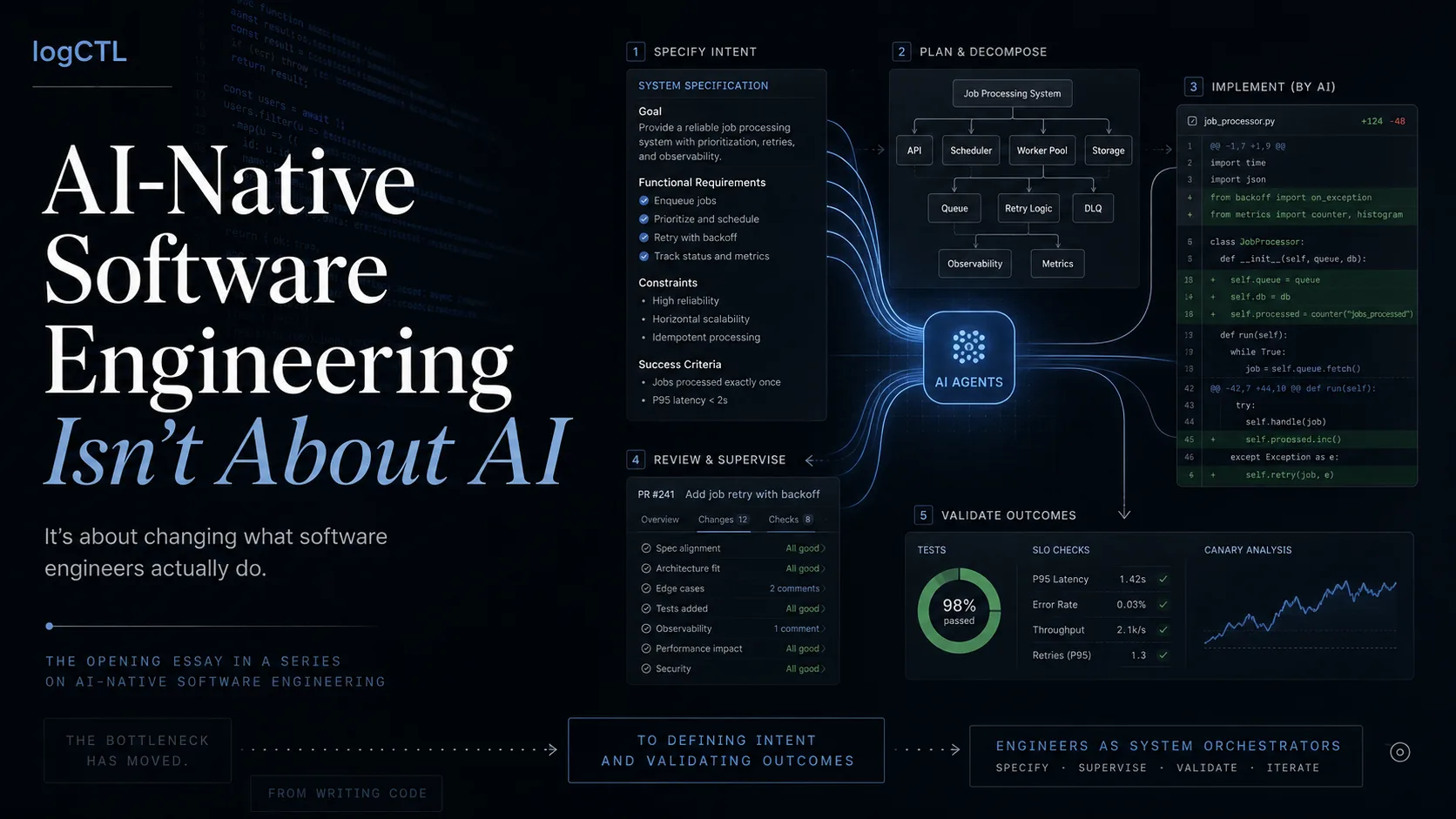
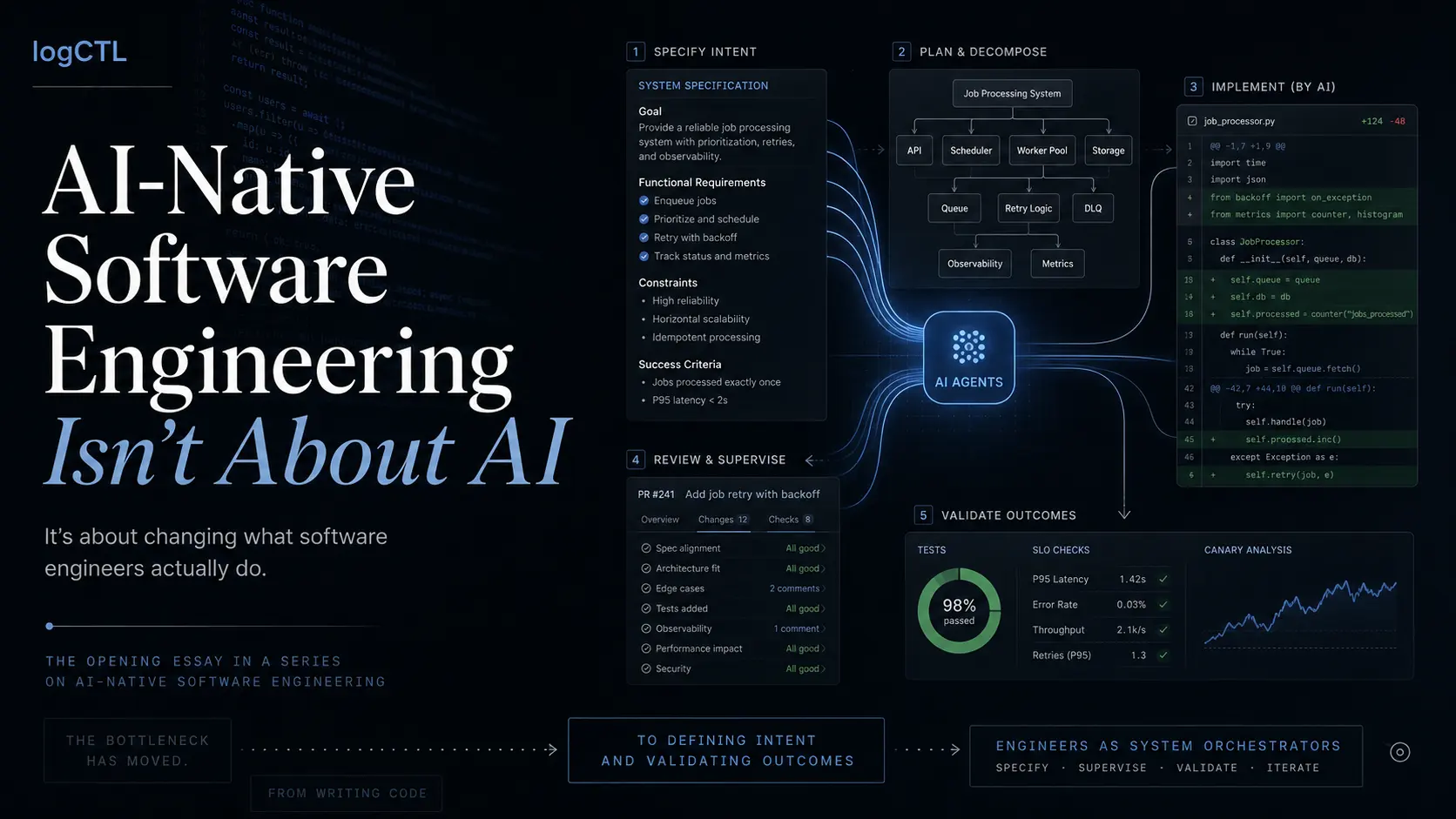
An engineer orchestrating AI agents that construct software, illustrating the inversion of the default relationship between human and machine.

The basic gist

The series in one minute

AI makes implementation cheaper, but it does not make ambiguity, judgment, or accountability disappear. It moves the centre of engineering toward defining intent, preparing context, controlling execution, and proving that the result is worth keeping.

  1. 1

    AI-native engineering is an operating model, not a measure of how many AI tools a company buys.

  2. 2

    As implementation becomes cheaper, ambiguity, context, review, and validation become the real constraints.

  3. 3

    Reliable adoption requires specifications, scoped context, an execution harness, and evidence—not better prompting alone.

  4. 4

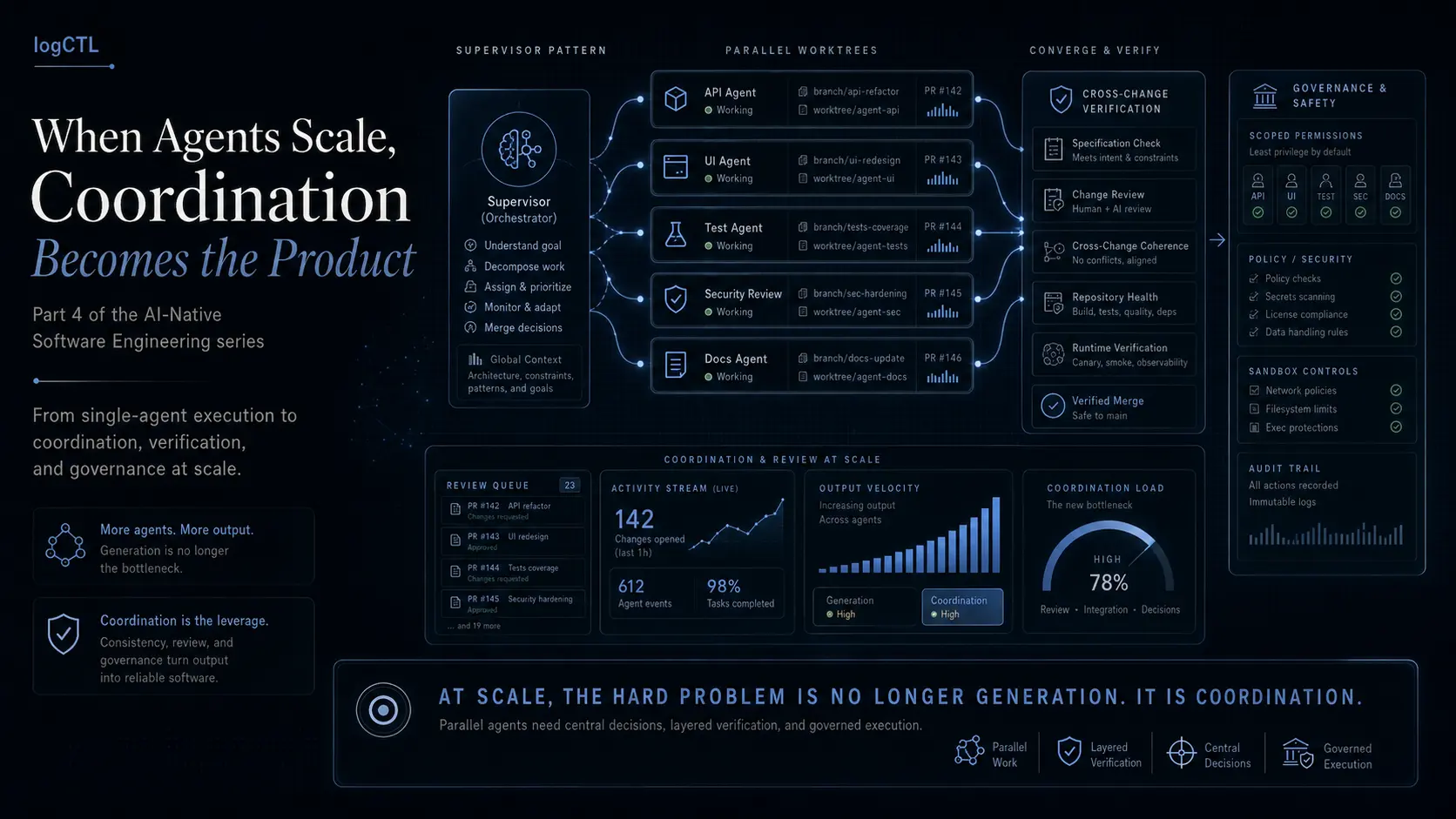
    Parallel agents multiply coordination, security, and governance demands before they multiply useful output.

  5. 5

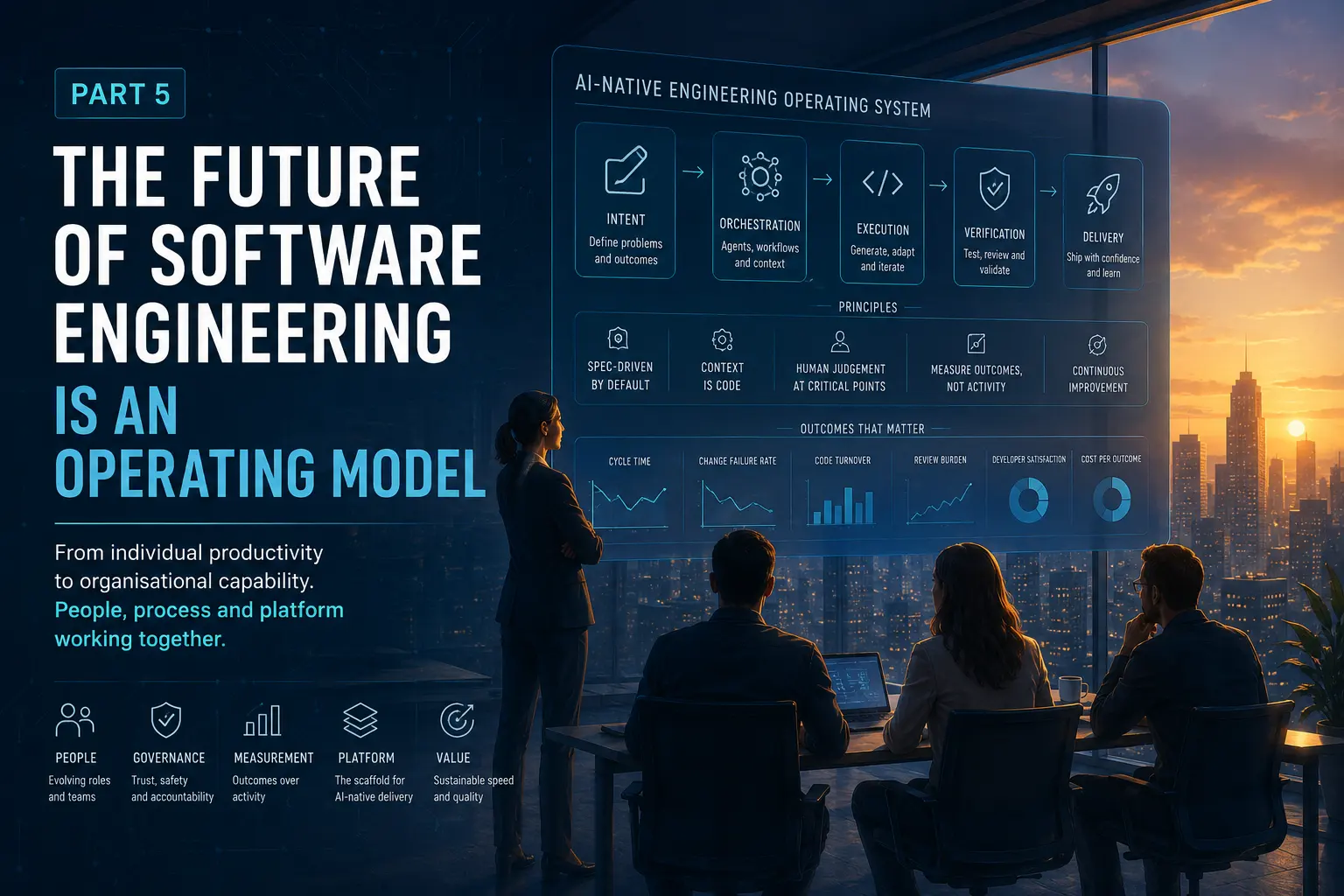
    The durable advantage comes from the organization around the model: its roles, platform, economics, metrics, and accountability.

How it fits

One argument in five stages

Each part answers the question created by the one before it. Read in order for the full progression.

  1. Part 1 Meaning
  2. Part 2 Evidence
  3. Part 3 Method
  4. Part 4 Scale
  5. Part 5 Operating model

The complete field guide

Read the transformation from first principles

The recommended route is Part 1 through Part 5. Every article stands alone, but together they move from the core idea to the organizational consequences.

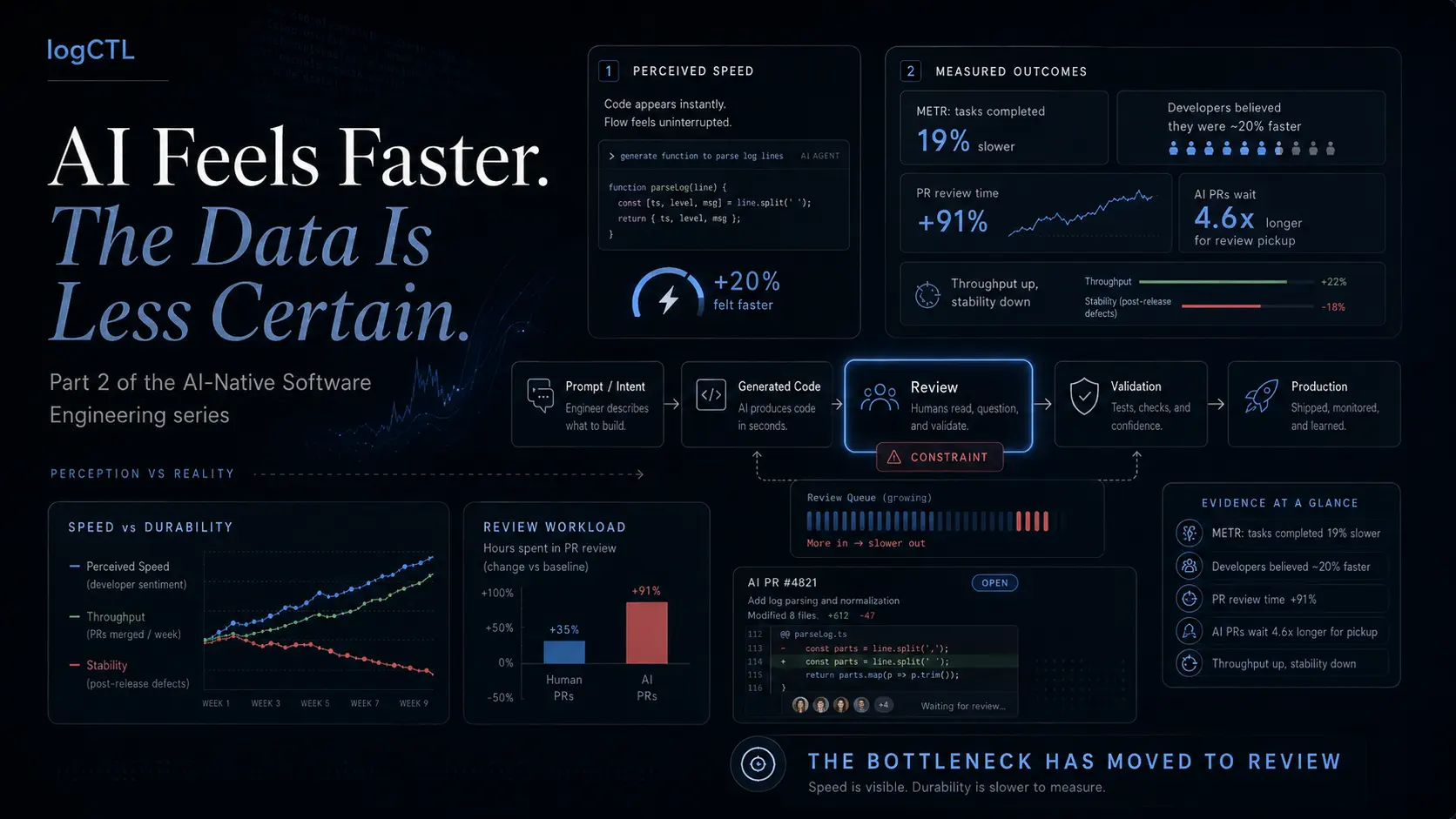
  1. A speedometer showing perceived velocity while the underlying data points in a different direction, illustrating the gap between felt productivity and measured delivery.
    Part 2 Evidence

    AI Feels Faster. The Data Is Less Certain.

    Separate the feeling of faster coding from system-level productivity, then identify review burden, durability, and delivery outcomes as the measurements that matter.

    For teams evaluating productivity, investment, or adoption.

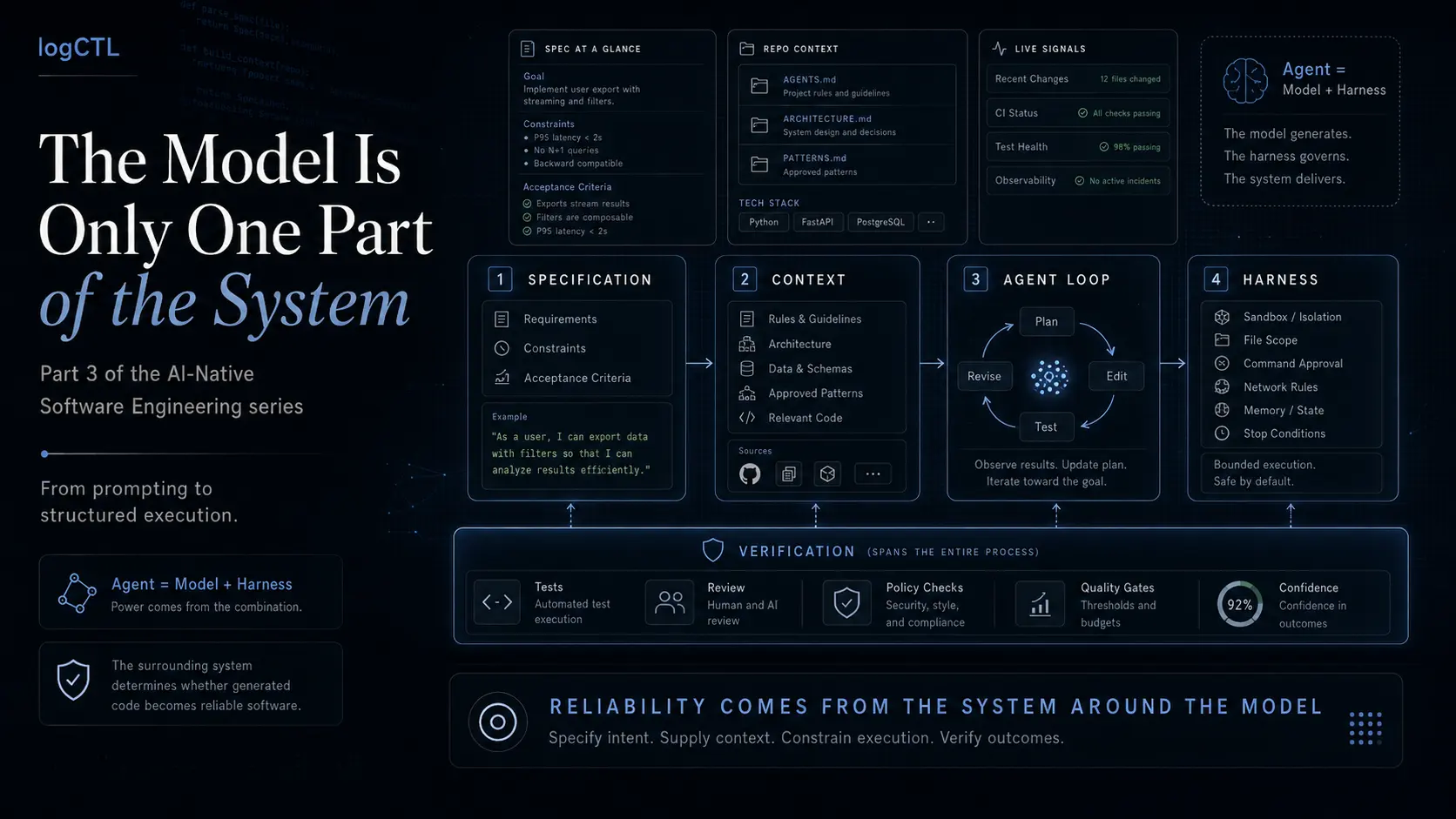
  2. A layered system showing specification, context, agent loop and harness surrounding a model, illustrating how reliability comes from structure rather than the model alone.
    Part 3 Method Project manager starting point

    The Model Is Only One Part of the System

    Turn the idea into a working method through specifications, context engineering, agent execution loops, permissions, stopping conditions, and verification.

    The practical starting point for project, product, and delivery managers.

Already know what you need?

Start where your work begins

You can enter at the question closest to your role, then continue forward through the remaining parts.

Start with the idea. Finish with the operating model.

The complete journey shows why AI-native engineering is ultimately less about the model than the system people build around it.

Begin Part 1